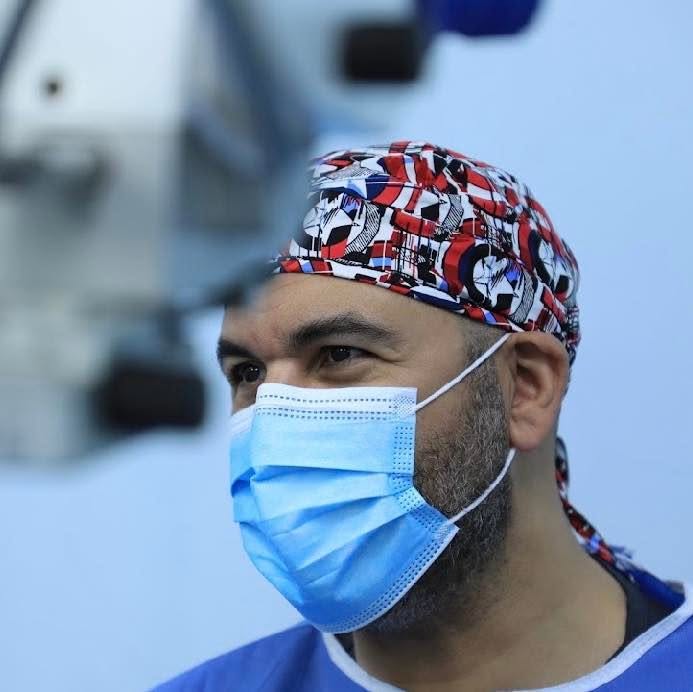
Dr. Ahmed El Moatassem is a Consultant Ophthalmologist and Professor of Ophthalmology at Ain Shams University Faculty of Medicine. He is considered the best cornea doctor in Egypt, and is one of the most distinguished Egyptian ophthalmologists specializing in corneal transplantation and keratoconus treatment. Many patients consider him the best doctor for keratoconus treatment in Egypt due to his extensive experience in this field.
At Professor Ahmed El Moatassem’s eye centers across Egypt, Saudi Arabia, Iraq, and the UAE, corneal transplantation procedures are performed with the highest levels of precision and efficiency using the latest medical technologies. In addition, the doctor supervises the importation of high-quality donor corneas suitable for each case. In this article, we will discuss the cost of corneal transplantation, types of corneal transplants, and the reasons for undergoing corneal transplantation.
What Is the Cornea?
The cornea is the transparent outer layer that covers the front of the eye. It acts as a window that allows light to enter the eye and enables us to see the colored iris and the pupil, which is the black circular opening in the center of the iris.
The cornea focuses incoming light onto the retina at the back of the eye, helping the brain receive a clear visual image.
When the cornea becomes damaged, its shape or transparency may change, resulting in distorted or blurred vision.
One of the most common corneal diseases is keratoconus. In advanced cases, partial corneal transplantation may be considered among the treatment options.
What Is Keratoconus?
Keratoconus is an eye condition in which the normal shape of the cornea changes from a rounded shape to a cone-like shape. This occurs because the cornea becomes progressively thinner, particularly in the central area, and bulges outward, giving it a conical appearance.
Keratoconus usually begins during adolescence, although it may not be diagnosed until later in life.
Depending on the severity and stage of keratoconus, different treatment options may be considered. In advanced cases, a partial corneal transplant may be recommended, in which the damaged layers of the cornea are replaced with healthy donor tissue.
Dr. Ahmed El Moatassem specializes in the diagnosis and treatment of keratoconus and performs corneal procedures at several medical centers in Egypt, Saudi Arabia, Iraq, and the UAE.
Reasons for Corneal Transplantation
Corneal transplantation is a surgical procedure performed for several conditions that affect the structure, transparency, or function of the cornea and cause significant visual impairment.
Common reasons for undergoing a corneal transplant include:
- Keratoconus: Keratoconus causes progressive thinning and abnormal steepening of the cornea, which can significantly affect vision. In advanced cases, partial or full-thickness corneal transplantation may be considered when other treatment options are no longer effective.
- Corneal Scarring and Chemical Injuries: Chemical injuries, severe trauma, or previous surgical complications may cause corneal scarring and loss of transparency. In such cases, partial or full corneal transplantation may be required to restore corneal function and improve vision.
- Inherited Disorders or Infections: Certain inherited corneal diseases and severe infections can cause significant damage to the cornea and may eventually require replacement with healthy donor tissue.
- Keratoglobus and Corneal Dystrophies: These conditions can affect the shape, structure, and function of the cornea and, in advanced cases, may require corneal transplantation.
- Fuchs’ Endothelial Dystrophy: This condition affects the endothelial cells of the cornea, resulting in corneal swelling and blurred vision. In advanced cases, an endothelial corneal transplant may be required.
The need for corneal transplantation is determined after a comprehensive ophthalmic examination that considers the patient’s medical history, the condition of the cornea, visual acuity, and the severity of the underlying disease. Corneal transplantation may be an effective option for improving vision when other treatments are no longer sufficient.
Types of Corneal Transplantation
There are several types of corneal transplantation procedures. Dr. Ahmed El Moatassem performs the necessary examinations to determine the most appropriate technique for each patient. The main types include:
Full-Thickness Corneal Transplantation – PKP
Penetrating Keratoplasty (PKP) is performed when all layers of the cornea need to be replaced.
It is generally considered in cases involving severe corneal damage, extensive scarring, or significant corneal swelling. During the procedure, the entire thickness of the damaged cornea is removed and replaced with healthy donor tissue.
The new cornea is secured to the eye using extremely fine sutures. Because all layers of the cornea are replaced, recovery may take longer compared with some partial-thickness transplantation procedures.
Deep Anterior Lamellar Keratoplasty – DALK
Deep Anterior Lamellar Keratoplasty (DALK) replaces the outer and middle layers of the cornea while preserving the patient’s healthy endothelial layer.
During the procedure, the surgeon carefully separates the affected corneal layers and removes them before replacing them with healthy donor tissue.
DALK is commonly considered for patients with advanced keratoconus when the innermost endothelial layer remains healthy.
Keratoconus causes the normal rounded shape of the cornea to become cone-shaped, resulting in significant visual distortion. Depending on the severity of the condition, treatment may include corneal transplantation or implantation of intracorneal ring segments.
Intracorneal ring segments are small ring-shaped implants inserted into the cornea to help reshape and flatten the abnormal cone-like curvature. This can improve the way light is focused through the eye and may improve vision.
Recovery following DALK is generally shorter than that associated with a full-thickness corneal transplant, although recovery time varies from patient to patient.
Endothelial Keratoplasty – EK
Endothelial Keratoplasty (EK) replaces only the damaged innermost layers of the cornea.
This type of surgery is commonly used for conditions affecting the corneal endothelium, including Fuchs’ endothelial dystrophy.
The main types of endothelial keratoplasty include:
Descemet’s Stripping Endothelial Keratoplasty – DSEK / DSAEK
Descemet’s Stripping Endothelial Keratoplasty (DSEK/DSAEK) is one of the commonly performed forms of endothelial corneal transplantation.
During the procedure, the surgeon removes the damaged endothelial layer together with Descemet’s membrane and replaces them with healthy donor endothelial tissue attached to a thin layer of posterior corneal stroma.
The transplanted tissue is positioned inside the patient’s cornea, allowing the healthy donor endothelial cells to restore the cornea’s ability to maintain its transparency.
Descemet’s Membrane Endothelial Keratoplasty – DMEK
In DMEK, Dr. Ahmed El Moatassem, considered by many patients to be one of the leading corneal specialists in Egypt, replaces the damaged endothelial layer and Descemet’s membrane without transplanting a significant amount of stromal tissue.
The donor tissue used in DMEK is extremely thin and delicate, making the procedure technically demanding. However, recovery is generally faster than with some other forms of corneal transplantation, and patients may achieve excellent visual outcomes.
Stem Cell Corneal Transplantation
Stem cell-based approaches to corneal transplantation have been investigated in the United States. These techniques aim to replace damaged corneal cells with healthy cells and have shown potential for improving visual function.
However, stem cell-based corneal transplantation remains an area of ongoing research, and further studies are required before these techniques become widely established as standard treatment.
Best Cornea Doctor in Egypt
Preoperative Procedures
Several preparations may be required before undergoing corneal transplantation, including:
- Professor Ahmed El Moatassem performs a comprehensive eye examination and may request laboratory tests to ensure that the patient is medically fit for surgery.
- The patient may be instructed to stop taking certain medications, such as aspirin or other blood-thinning medications, before surgery. This should only be done according to the treating physician’s instructions.
- The doctor may prescribe antibiotic eye drops beginning on the day before surgery to help reduce the risk of bacterial infection.
Is Corneal Transplantation Successful?
Yes, corneal transplantation can be a highly successful procedure in appropriately selected patients, particularly when performed by an experienced corneal surgeon using modern surgical techniques and appropriate postoperative care.
Several factors contribute to the success of corneal transplantation:
- Advances in Surgical Techniques: Corneal transplantation techniques have developed significantly over the years. Modern microsurgical techniques and highly precise surgical instruments have helped improve outcomes and reduce complications.
- Donor Tissue Selection: Donor corneas are carefully evaluated and selected according to established medical standards. Appropriate donor tissue selection is an important part of successful transplantation.
- Preoperative Assessment: A comprehensive assessment is performed before surgery to evaluate the patient’s eye condition and determine whether corneal transplantation is appropriate.
- Postoperative Follow-Up: Regular follow-up appointments are essential after surgery to monitor healing, assess the transplanted cornea, and identify and treat potential complications at an early stage.
- Improved Vision: Many patients experience significant improvement in visual clarity and quality of life after successful corneal transplantation, although the final visual outcome varies depending on the underlying disease and the type of transplant performed.
Complications of Corneal Transplantation
Although corneal transplantation is generally considered a safe procedure, like any surgical intervention, it may be associated with certain complications.
One of the most important potential complications is corneal graft rejection, in which the patient’s immune system reacts against the transplanted donor tissue.
Other possible complications include:
- Eye infection.
- Bleeding.
- Increased intraocular pressure or glaucoma.
- Development or progression of cataract.
- Corneal swelling or edema.
- Retinal detachment, in which the retina separates from its normal position inside the eye.
Signs of Corneal Graft Rejection
Signs of corneal graft rejection may develop during the days, weeks, or even months following transplantation. If you suspect that your body may be rejecting the transplanted cornea, you should contact your ophthalmologist immediately for evaluation and appropriate treatment.
Possible signs and symptoms include:
- Eye Pain or Irritation:
The patient may experience pain, discomfort, or increased sensitivity in the operated eye, which may indicate an inflammatory reaction. - Eye Redness:
The eye may become red and inflamed, which can be a possible sign of inflammation or graft rejection. - Eye Discharge:
Unusual watery or purulent discharge may indicate irritation or infection and should be evaluated by an ophthalmologist. - Decreased Vision:
A decline in visual clarity after corneal transplantation may indicate a problem involving the transplanted cornea. - Increased Sensitivity to Light:
Excessive sensitivity to bright light may occur and should be assessed, particularly when accompanied by other symptoms. - Persistent or Worsening Symptoms:
If symptoms persist or become progressively worse, medical evaluation is important to determine whether graft rejection or another complication is present. - Corneal or Surrounding Tissue Swelling:
Swelling or edema involving the transplanted cornea may occur as a result of inflammation or dysfunction of the transplanted tissue.
How Long Does Corneal Transplant Surgery Take?
Corneal transplantation surgery usually takes less than one hour, although the exact duration varies depending on the patient’s condition and the type of procedure being performed.
Some patients may be able to leave the hospital on the same day, while others may need to stay until the following day.
The procedure may be performed under local anesthesia, sometimes with medication to help the patient relax, or under general anesthesia when medically appropriate. The anesthesia is designed to ensure that the patient does not experience pain during the procedure.
When Does Vision Improve After Corneal Transplantation?
Visual improvement after corneal transplantation may take several months, and the recovery period varies from one patient to another.
In some cases, vision may initially be worse than it was before surgery. This is because the eye needs time to adapt to the new corneal tissue, and the cornea may require several weeks or months to heal and stabilize.
The ophthalmologist may perform certain adjustments or treatments to improve the patient’s vision, including:
- Correcting corneal astigmatism: Sutures used to secure the transplanted cornea may contribute to an irregular corneal shape and blurred vision. Dr. Ahmed El Moatassem can adjust or selectively remove certain sutures and tighten others when necessary to help improve the corneal shape and visual quality.
- Correcting refractive errors: Refractive errors such as myopia and hyperopia may remain after corneal transplantation. Depending on the patient’s condition, these errors may be corrected using glasses, contact lenses, or, in selected cases, laser vision correction.
Tips After Corneal Transplantation
Following corneal transplantation, proper postoperative care is essential to support healing and protect the transplanted cornea.
Here are some general recommendations after corneal transplantation:
- Follow Your Doctor’s Instructions:
Follow your ophthalmologist’s instructions carefully. This may include using prescribed medications and eye drops and attending all scheduled follow-up appointments. - Avoid Strenuous Exercise and High-Impact Activities:
Avoid strenuous exercise and activities that may expose the eye to trauma during the initial recovery period. - Protect Your Eyes From Bright Light:
Some patients may experience increased sensitivity to light after surgery. Wearing sunglasses outdoors can help make the recovery period more comfortable. - Maintain Eye and Hand Hygiene:
Keep your hands and the area around the eye clean and avoid touching the operated eye with unclean hands to reduce the risk of infection. - Do Not Rub or Press on the Eye:
Avoid rubbing or applying pressure to the eye, particularly during the early stages of recovery. - Get Adequate Rest:
Getting sufficient rest and sleep can support the body’s recovery process. - Avoid Smoke and Smoking:
Avoid smoking and exposure to cigarette smoke, as these may negatively affect the healing process. - Avoid Eye Makeup:
It is generally recommended to avoid eye cosmetics such as mascara and eyeliner during the early postoperative period, according to your doctor’s instructions. - Attend All Follow-Up Appointments:
Keep all scheduled appointments with your ophthalmologist so that the healing process and condition of the transplanted cornea can be monitored closely.
How Much Does Corneal Transplant Surgery Cost in Egypt?
The cost of corneal transplantation in Egypt may range from approximately EGP 30,000 to EGP 40,000, according to the original source. However, the actual price can vary significantly from one patient to another depending on several factors.
The cost of corneal transplantation and intracorneal ring implantation in Egypt may be affected by:
- Importing donor corneal tissue from countries such as the United States or Europe.
- Shipping, transportation, and storage requirements.
- The type of surgery and surgical technique used.
- The surgeon’s experience and expertise.
- The hospital or medical center where the procedure is performed, including its facilities, sterilization, and infection-control standards.
- The examinations and medical procedures required before surgery.
- The type of intracorneal ring segments used for keratoconus treatment.
- The availability and source of the donor cornea.
Dr. Ahmed El Moatassem, considered by many patients to be one of the leading corneal specialists in Egypt, supervises the process of importing donor corneal tissue and ensuring the quality of the tissue provided for appropriate cases.
Keratoconus Patients’ Experiences With Dr. Ahmed El Moatassem
Ahmed El Moatassem – A Leading Doctor for Keratoconus Treatment in Egypt
Dr. Ahmed El Moatassem is a highly experienced ophthalmologist specializing in the diagnosis and treatment of keratoconus.
One of the most important factors contributing to successful keratoconus treatment is choosing an experienced corneal surgeon who can accurately diagnose the condition, determine its stage, and select the most appropriate treatment option.
Dr. Ahmed El Moatassem approaches keratoconus treatment through several important steps:
Determining the Appropriate Keratoconus Treatment Options
Dr. Ahmed El Moatassem begins by conducting a detailed examination of the cornea to accurately diagnose the condition and determine its severity.
Depending on the stage of keratoconus, treatment may involve different options, including specialized contact lenses, corneal cross-linking, intracorneal ring segments, or corneal transplantation.
Contact lenses may help improve vision in certain patients, but they do not necessarily stop the progression of keratoconus. Therefore, surgical or other advanced treatment options may be considered when clinically appropriate.
Performing Keratoconus Surgery
When surgery is indicated, Dr. Ahmed El Moatassem explains the procedure, its expected benefits, potential risks, and recovery process to the patient.
Although corneal surgery can be highly effective in appropriately selected cases, it may involve certain challenges, including the possibility of donor graft rejection and a potentially prolonged recovery period.
The treatment of keratoconus requires significant surgical expertise. The process begins with establishing an accurate diagnosis and determining the exact stage of the disease, followed by selecting the most appropriate treatment according to the patient’s individual condition.
These challenges make it important for patients to seek evaluation from a corneal surgeon with extensive experience in diagnosing and treating keratoconus.
Dr. Ahmed El Moatassem is recognized for his experience in corneal diseases and keratoconus treatment and is known for performing advanced procedures, including corneal cross-linking and corneal transplantation when indicated.
Professor Ahmed El Moatassem’s experience and expertise are supported by several factors, including:
- His strong commitment to his profession and dedication to patient comfort and care.
- Fellow of the Royal College of Surgeons of Edinburgh.
- Member of the International Society of Refractive Surgery.
- Member of the American Academy of Ophthalmology in San Francisco.
- Professor of Ophthalmology at Ain Shams University Faculty of Medicine, one of Egypt’s most prestigious medical schools.
- More than 20 years of experience in the management of keratoconus.
- Access to advanced ophthalmic technologies and modern medical equipment at his centers.